
What Is a Cultured Freshwater Pearl?
In the world of gemstones, few terms cause as much confusion as “cultured freshwater pearl.” Some assume it is a fake plastic bead, while others think it is a lesser version of a “real” pearl. The truth is far more fascinating. A cultured freshwater pearl is not only a real pearl but also one of the most successful examples of modern aquaculture and natural beauty combined.
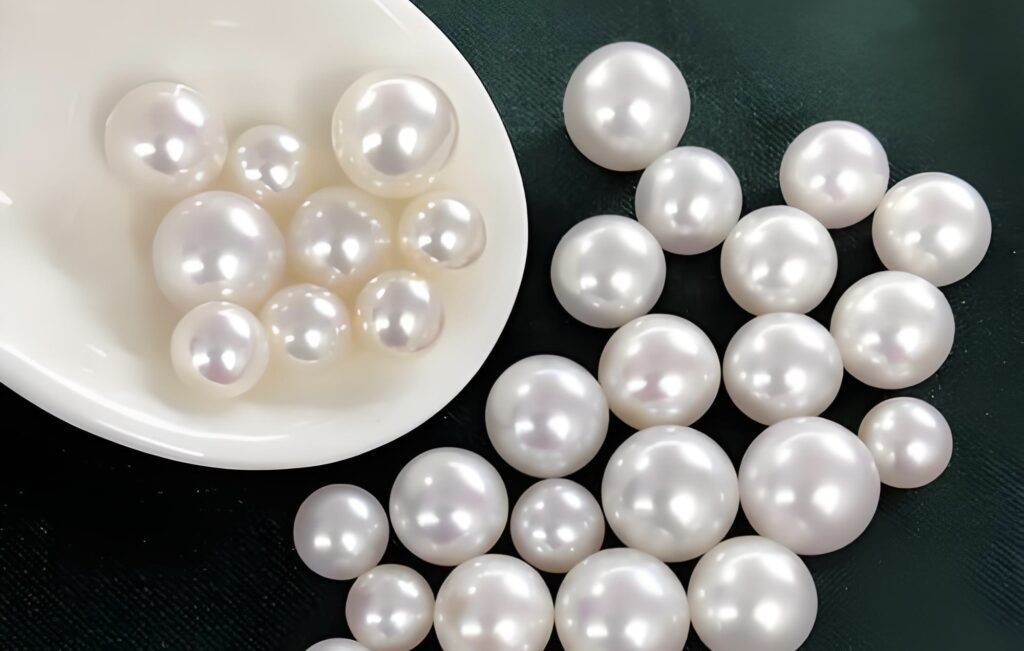
So, what exactly is cultured freshwater pearl? Let’s break it down.
- The Definition: A Real Gem Created by Humans and Nature
A cultured freshwater pearl is a genuine gemstone grown inside a living mussel in a lake, river, or pond, with the assistance of human intervention.
“Freshwater”: This refers to the environment. Unlike saltwater pearls (such as Akoya, Tahitian, or South Sea pearls) that grow in oceans, freshwater pearls grow in bodies of freshwater.
“Cultured”: This refers to the method. It means that a technician gently inserted a small piece of mantle tissue into the mussel to stimulate the pearl-making process. The mussel does all the work of secreting nacre (the pearly substance), but humans start the process.
Key Fact: Chemically and structurally, it is identical to a natural pearl. It is made of calcium carbonate and conchiolin, just like the pearls found in nature.
- Where Do Cultured Freshwater Pearl Come From?
The vast majority of the world’s cultured freshwater pearls—approximately 95%—come from China. Specifically, they are farmed in the lakes and reservoirs of provinces like Zhejiang and Hunan. In recent years, Japan and the United States have also produced small quantities, but China dominates the market.
- How Are They Different from Other Pearls?
To understand them better, it helps to compare them to their saltwater cousins.
| Aspect | Freshwater Pearls | Saltwater Pearls (Akoya / Tahitian / South Sea) |
|---|---|---|
| Growth Environment | Rivers and lakes (mainly China) | Oceans and seas |
| Mollusk Type | Freshwater mussels | Saltwater oysters |
| Nucleus | Usually nucleus-free (tissue-only) | Usually beaded nucleus (mother-of-pearl bead) |
| Luster | Soft, gentle luster; less mirror-like | Sharp, reflective, often very bright |
| Shape | Often baroque / irregular; some near-round | More likely to be round or near-round |
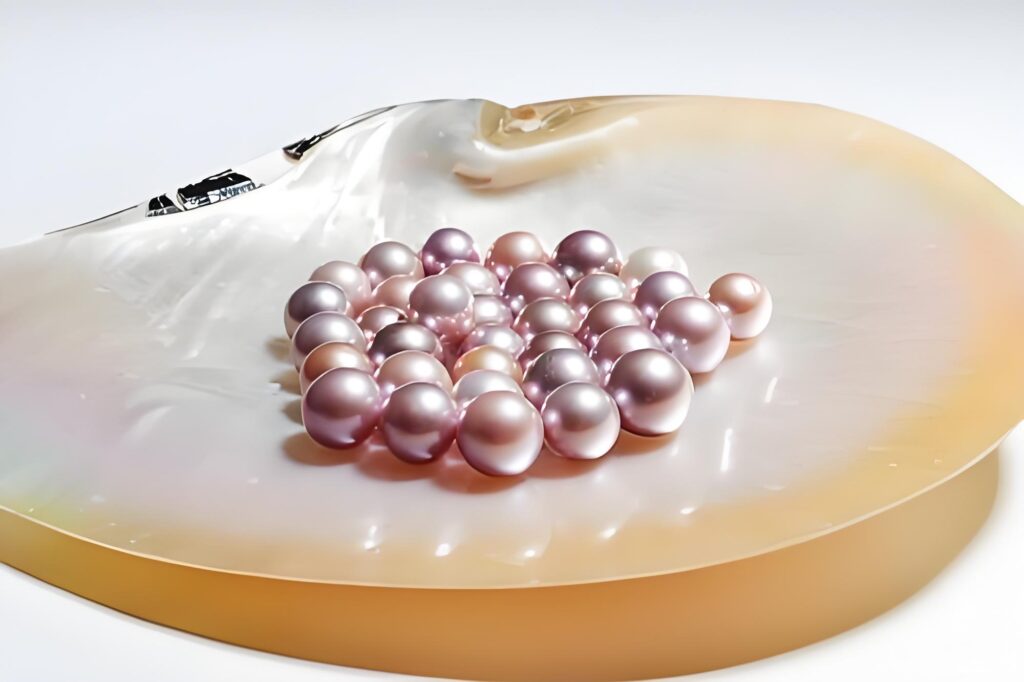
| Color Range | White, pink, peach, lavender, purple | White, cream, black, silver, gold |
| Size | Commonly 5–10 mm | Commonly 7–15 mm (larger on average) |
| Surface Quality | May show more spots or ridges | Often smoother and cleaner |
| Production per Mollusk | Many pearls at once (up to dozens) | Usually 1–2 pearls per oyster |
| Price | Generally more affordable | Generally more expensive |
| Durability | Solid nacre, very durable | Durable, but thickness varies |
Freshwater pearls grow in rivers and lakes without a bead nucleus, so they are made almost entirely of nacre. This makes them very durable and affordable, but they are less often perfectly round and usually have a softer luster.
Saltwater pearls, such as Akoya, Tahitian, and South Sea pearls, grow in the ocean with a bead nucleus. They are more likely to be round, have a sharper, more mirror-like luster, and are generally larger and more expensive.
- Unique Characteristics Of Cultured Freshwater Pearl
Cultured freshwater pearls have distinct traits that make them stand out:
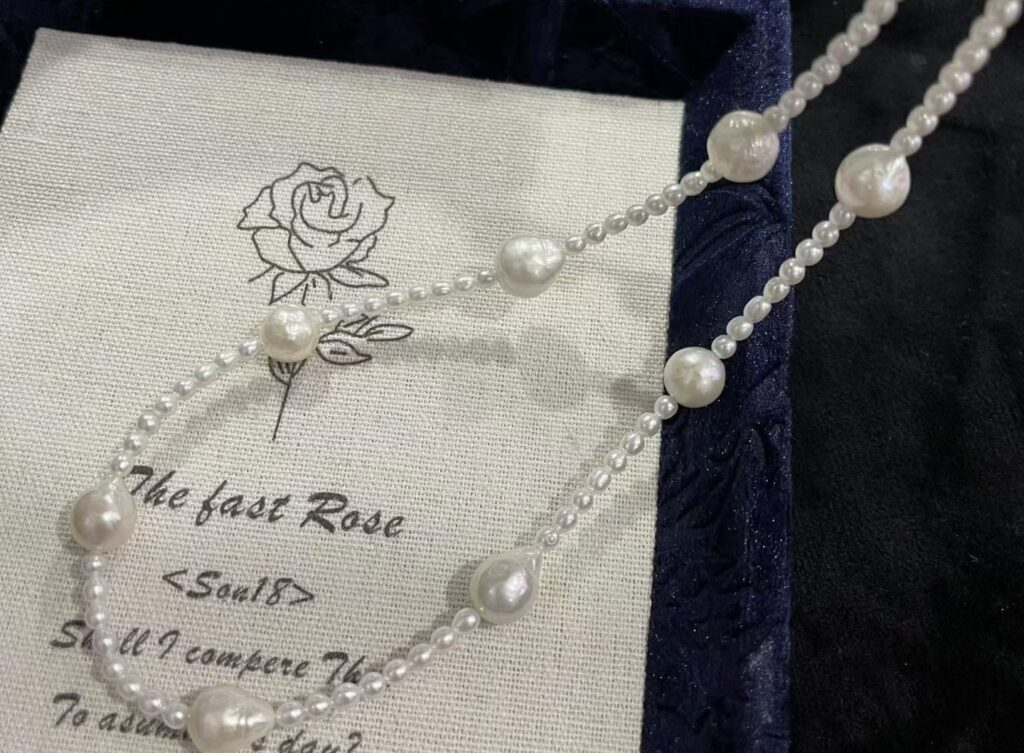
The “Rice Krispie” Shape: Many freshwater pearls are oval or rice-shaped rather than perfectly round. This is normal and gives them a unique, organic look.
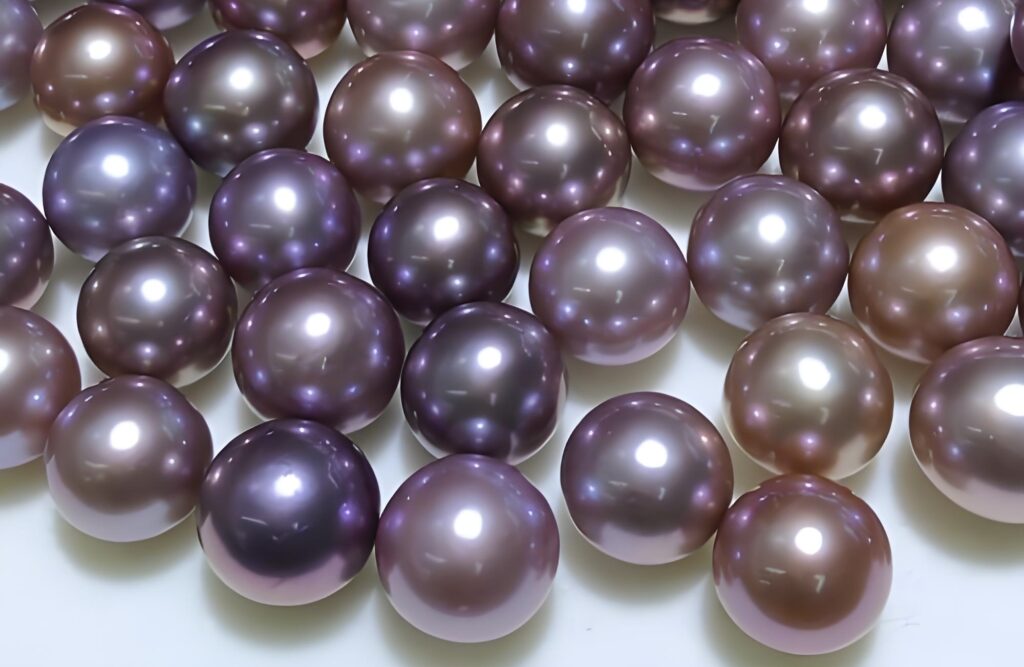
Pastel Colors: While white is the most common color, freshwater pearls naturally occur in beautiful shades of pink, peach, lavender, and plum.
Metallic Luster: Top-grade freshwater pearls (often called “Edison pearls”) can display a rare, mirror-like metallic luster that rivals the most expensive South Sea pearls.
Baroque Beauty: They are famous for their baroque shapes—twisted, irregular forms that are highly sought after in modern, artistic jewelry designs.
- Is Cultured Freshwater Pearl Real or Fake?
This is the most common question. They are 100% real.
If you rub a cultured freshwater pearl against your tooth, it will feel gritty (like sandpaper). A fake plastic pearl will feel smooth. Because they are solid nacre, they are actually quite tough and resistant to chipping, making them perfect for everyday wear.
- Why Is Cultured Freshwater Pearl So Popular?
Their popularity stems from three factors:
Accessibility: They allow almost anyone to own a piece of real pearl jewelry without spending a fortune.
Versatility: Their diverse shapes and colors make them ideal for creative and contemporary jewelry designs.
Ethics: Pearl farming is a sustainable practice that supports local economies and often improves water quality.