
How To Choosing Between Freshwater And Saltwater Pearls?
When it comes to choosing between freshwater and saltwater pearls, there is no single “best” option—each has its own beauty, strengths, and ideal uses. The right choice depends on your budget, style preference, and what you value most in a pearl.
Choosing between freshwater and saltwater pearls is essentially a balancing act between budget, durability, and aesthetic preference. While both are “real” pearls, they differ significantly in how they are grown and how they look.
Here is a comprehensive guide to help you decide which is right for you.
1. The Core Differences At A Glance
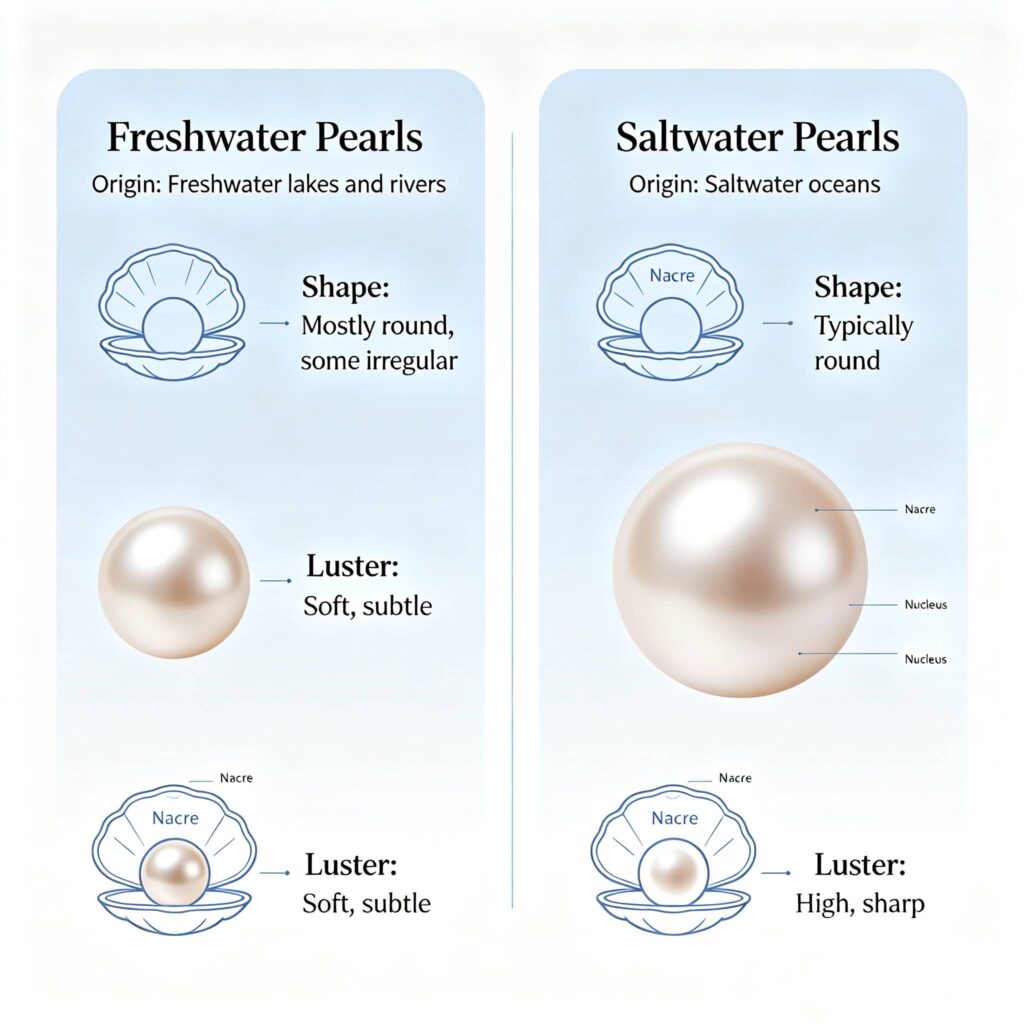
2. Deep Dive: How To Decide On Choosing Between Freshwater And Saltwater Pearls
A. Consider Your Budget
- Choose Freshwater if: You want the best value. Because a single mussel can produce up to 30 pearls at a time, they are significantly more affordable. You can get a strand of high-luster freshwater pearls for a fraction of the cost of saltwater.
- Choose Saltwater if: You are looking for an investment piece or a significant gift. Saltwater pearls (like Akoya or South Sea) are rarer and command higher prices due to the longer cultivation time and lower yield (usually 1-2 pearls per oyster).
B. Evaluate Durability & Lifestyle
- Choose Freshwater if: You plan to wear your pearls every day. Freshwater pearls are composed almost entirely of nacre (the substance that makes pearls shiny), making them more resistant to chipping and peeling. They are ideal for bracelets or rings that might get knocked around.
- Choose Saltwater if: The jewelry will be worn for special occasions or kept with care. Saltwater pearls have a bead nucleus inside with a thinner layer of nacre coating. They are more delicate and require gentler handling to avoid damage to the surface.
C. Define Your Aesthetic Style
- Choose Saltwater (specifically Akoya) if: You desire the classic, traditional look. You want that “mirror-like” sharp luster and a perfectly round shape that screams elegance and formality.
- Choose Freshwater if: You love modern, unique, or bohemian styles. Freshwater pearls come in fascinating irregular shapes (called Baroque) and a wider range of natural pastel colors like lavender and peach that saltwater pearls rarely possess.

Freshwater pearls are primarily farmed in lakes and rivers, mainly in China. They are known for their wide range of shapes, soft luster, and affordability. Because many pearls can be harvested from a single mussel, freshwater pearls are generally more budget-friendly than their saltwater counterparts. They come in various pastel shades—white, pink, lavender, and peach—making them versatile for both classic and modern jewelry designs. While they may not always match the perfect roundness of top-grade saltwater pearls, their unique colors and organic shapes appeal to those who prefer a more natural look.
Saltwater pearls, such as Akoya, Tahitian, and South Sea pearls, are cultivated in oceans and seas. Akoya pearls from Japan and China are famous for their high luster and perfectly round shape, often seen in traditional strand necklaces. Tahitian pearls, often called “black pearls,” are prized for their exotic dark hues, ranging from charcoal gray to deep green. South Sea pearls, found in Australia, Indonesia, and the Philippines, are the largest and among the most valuable, with warm white, silver, or golden tones. Saltwater pearls usually have thicker nacre, which contributes to their durability and glow—but they also command higher prices.
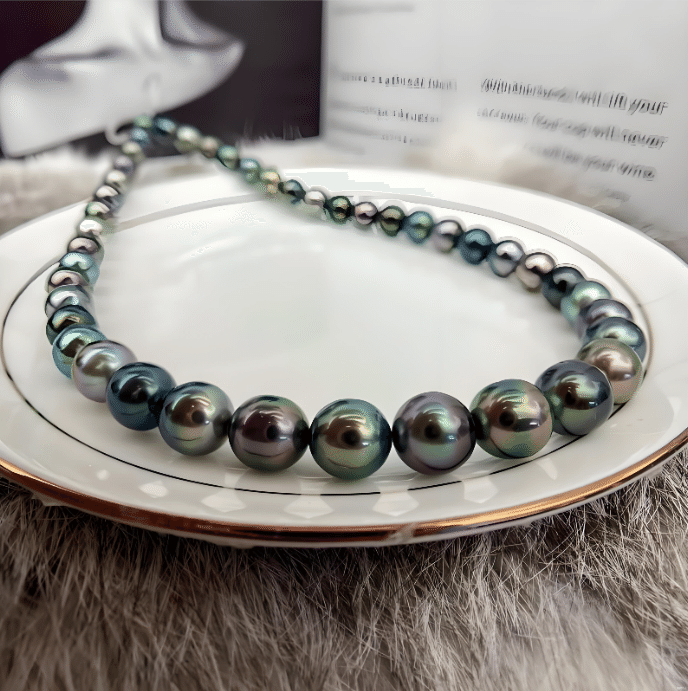
In terms of quality, saltwater pearls often win in luster and uniformity, while freshwater pearls shine in variety and affordability. If you want timeless elegance and are willing to invest more, saltwater pearls may be the better choice. If you prefer creative designs, diverse colors, and a gentler price point, freshwater pearls could suit you best.
Ultimately, neither type is universally “better.” Both freshwater and saltwater pearls have their own charm and place in the world of jewelry. The best pearl is the one that speaks to your personal taste, fits your lifestyle, and makes you feel beautiful when you wear it.