
The Essential Guide: How to Identify Real Pearls
How to identify real pearls? Distinguishing between real pearls and their imitation counterparts is a crucial skill for any pearl enthusiast or buyer. With advances in manufacturing, synthetic pearls can sometimes appear deceptively convincing. This comprehensive guide will equip you with both traditional techniques and expert methods to confidently identify genuine pearls.
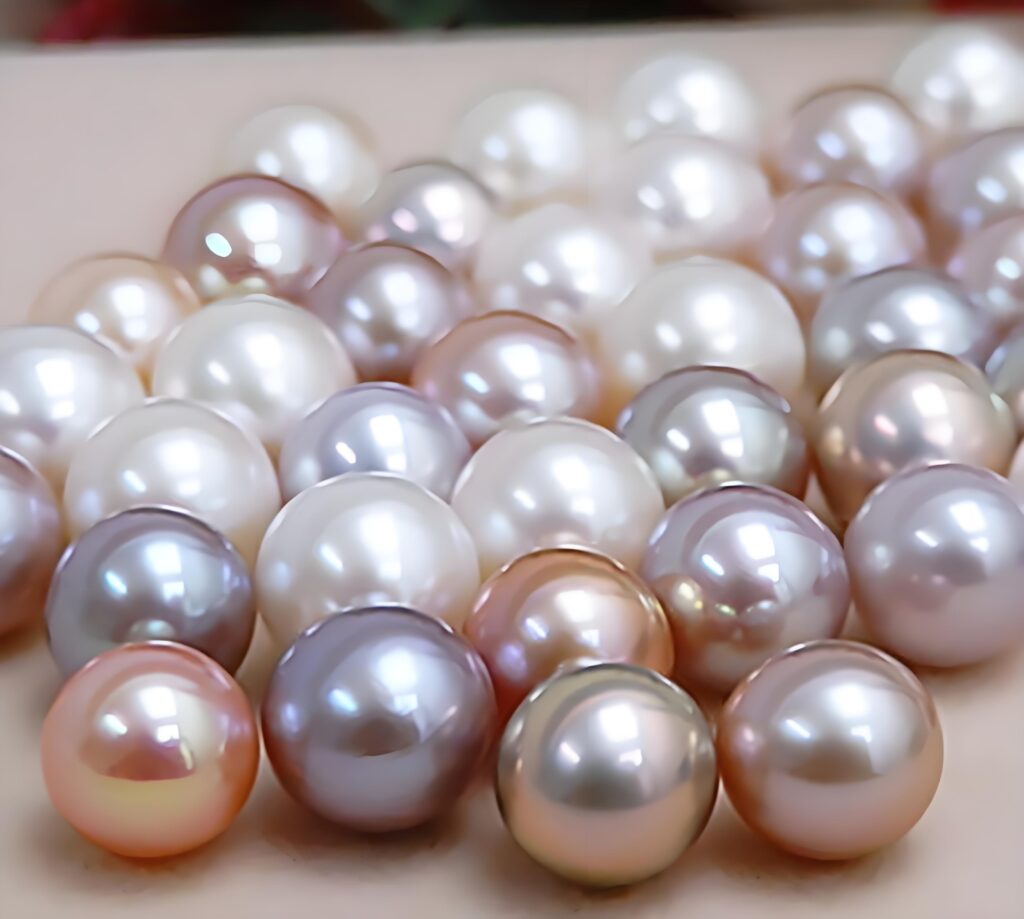
1. The Tooth Test For How To Identify Real Pearls
One of the simplest and most reliable methods is the “tooth test.” Gently rub the pearl against the edge of your front teeth or along the biting surface.
- Real pearls feel slightly gritty or sandy due to their layered nacre structure.
- Fake pearls usually feel smooth or glassy.
Note: Be gentle—this test should never scratch or damage the pearl.
2. Examine the Surface
Under natural light, inspect the pearl closely with the naked eye or a magnifying glass.
- Real pearls often have minor imperfections: tiny bumps, ridges, or slight irregularities. Perfectly uniform surfaces are rare in nature.
- Imitation pearls tend to look too perfect—uniformly round, flawlessly smooth, and evenly colored.
3. Check the Luster
Luster refers to the way light reflects off a pearl’s surface and glows from within.
- Real pearls display a deep, soft inner glow. When you move the pearl, the reflections shift subtly.
- Fake pearls often have a harsh, mirror-like shine or a flat, painted-on appearance. The color may sit only on the surface rather than glowing from within.
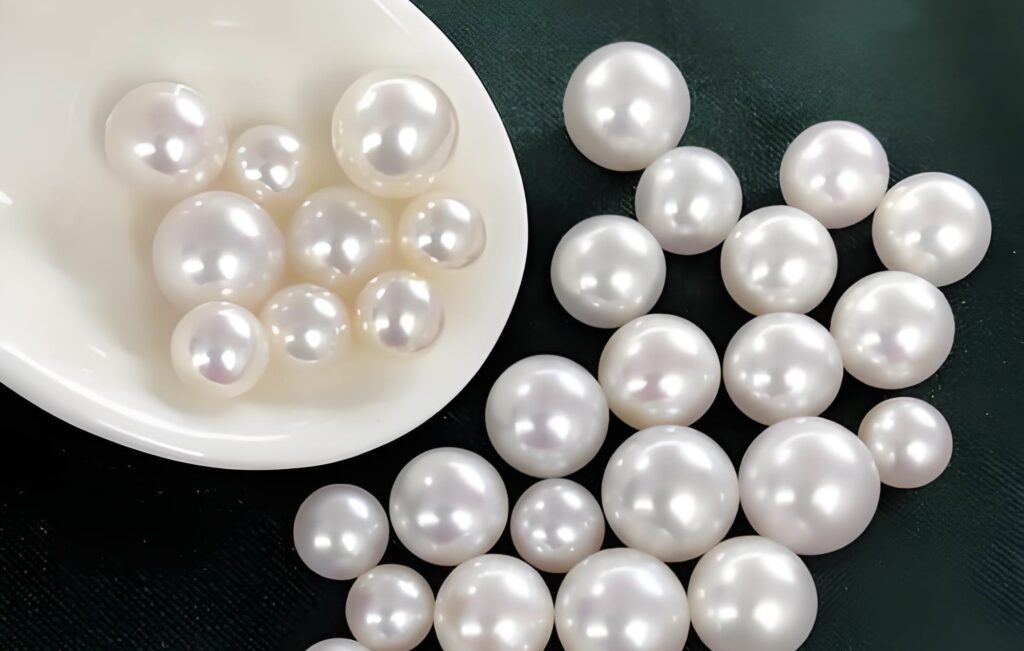
4. Look at the Drill Hole
Examine the hole where the pearl is strung.
- Real pearls show layered nacre around the edges of the hole. You might notice slight chipping or a concentric-ring pattern.
- Fake pearls may reveal a plain, solid core (plastic or glass) beneath a thin coating. The paint can sometimes flake near the hole.
5. Temperature Feel
Pearls are surprisingly temperature-sensitive.
- Real pearls feel cool to the touch at first and warm up gradually against your skin.
- Plastic imitations warm up almost instantly, while glass pearls may feel colder for longer but lack the gradual transition of real pearls.
6. Weight Test
Genuine pearls are denser than most fakes.
- Hold the pearl in your hand—real pearls feel reassuringly weighty for their size.
- Plastic pearls feel noticeably light; glass pearls may feel heavier but still lack the subtle density of natural nacre.
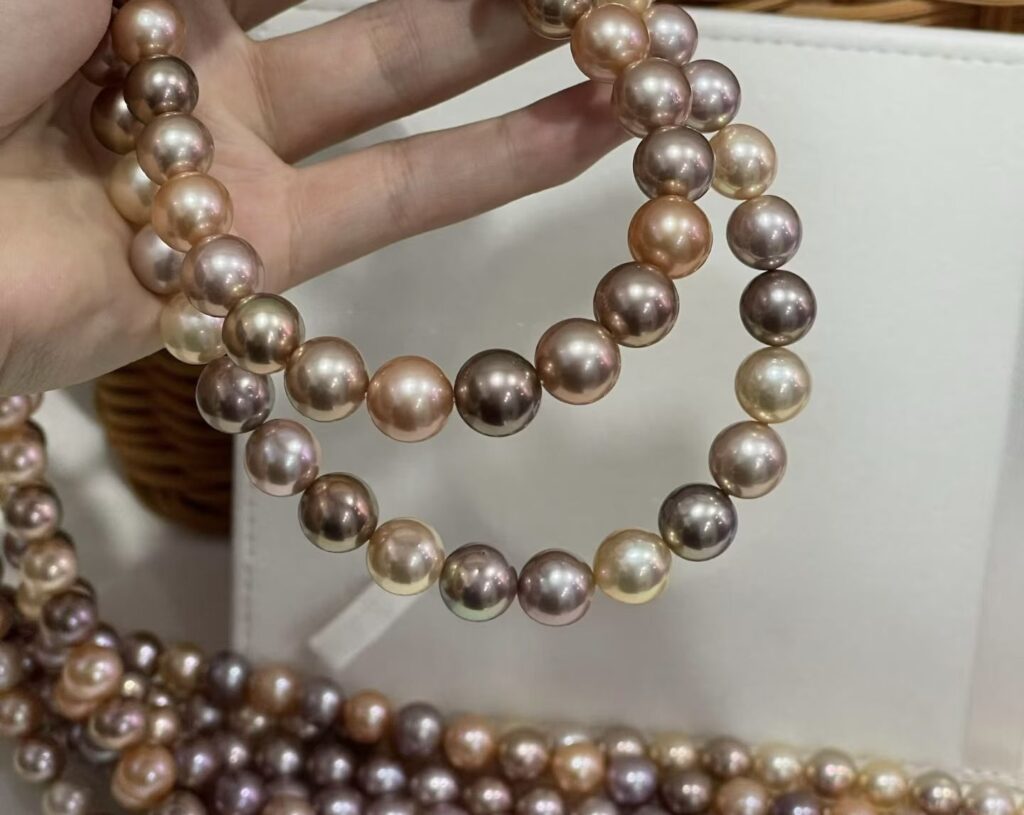
7. The Friction Test
- Real pearls produce a faint, gritty resistance and may leave a tiny amount of powdery residue (from the nacre).
- Fake pearls glide smoothly or feel slippery.
8. Professional Verification
If you’re still unsure—especially when dealing with valuable or antique pieces—consult a certified gemologist or reputable jeweler. They can perform advanced tests, such as X-ray analysis, to confirm whether a pearl is natural, cultured, or imitation.
Final Thoughts
While no single test is foolproof, combining several observations greatly improves accuracy. Real pearls are rarely perfect, and their beauty lies precisely in their subtle flaws and natural glow. Learning to recognize these characteristics not only protects you from counterfeits but also deepens your appreciation for one of nature’s most exquisite creations.